Contents
Cherry
#perennial

:max_bytes(150000):strip_icc()/fruits-vegetables-what-season-when-summer-cherries-getty-0323-30639a11a44343fca0eeb52ea0271410.jpg)

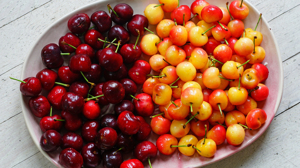
Cherries belong to the genus Prunus and include a wide variety of species and cultivars used for fruit, ornamental purposes, and timber. The main types of cherries fall into two broad categories based on their fruit use and characteristics:
1. Sweet Cherries (Prunus avium)
Description: Large, firm, heart-shaped fruit that are sweet and eaten fresh.
Uses: Fresh eating, desserts, and some cooking.
Examples: Bing, Rainier, Lambert, Chelan.
Climate: Prefer milder winters, generally hardy to USDA zones 5-7.
Notes: Sweet cherries are often self-sterile and require cross-pollination.
2. Sour (Tart) Cherries (Prunus cerasus)
Description: Smaller, softer, more acidic fruit than sweet cherries.
Uses: Cooking, baking (pies, jams), and preserves.
Examples: Montmorency, Morello, Balaton.
Climate: More cold-hardy than sweet cherries, suitable for USDA zones 4-7.
Notes: Sour cherries are often self-fertile and easier to grow in colder climates.
Other Notable Cherry Types and Species
| Type | Species or Group | Description & Use | Hardiness & Notes |
|---|---|---|---|
| Bird Cherries | Prunus padus and relatives | Small, sour fruits mostly eaten by birds; ornamental and wildlife value | Native to temperate Northern Hemisphere; not widely cultivated for fruit |
| Black Cherry | Prunus serotina | Wild cherry with small, dark fruit; wood valuable for timber | Native to North America; fruit edible but tart |
| Nanking Cherry | Prunus tomentosa | Small, tart fruit; used in jams and jellies | Very cold-hardy, good for northern climates |
| Cherry Laurels | Prunus laurocerasus | Evergreen shrubs/trees, ornamental; fruit not typically eaten | Used mainly for landscaping |
| Hawthorn Cherries | Various Crataegus species | Small fruit, sometimes called cherries but botanically different | Mostly ornamental or wildlife food |
Summary Table of Common Cherry Types
| Cherry Type | Species (Scientific Name) | Primary Use | USDA Hardiness Zone | Notes |
|---|---|---|---|---|
| Sweet Cherry | Prunus avium | Fresh eating | 5-7 | Requires cross-pollination |
| Sour Cherry | Prunus cerasus | Cooking, preserves | 4-7 | Often self-fertile |
| Black Cherry | Prunus serotina | Wild fruit, timber | 3-7 | Native, fruit tart |
| Nanking Cherry | Prunus tomentosa | Jams, jellies | 3-6 | Very cold-hardy |
| Bird Cherry | Prunus padus | Ornamental, wildlife | 3-7 | Small sour fruit |
| Cherry Laurel | Prunus laurocerasus | Ornamental | 6-8 | Not typically edible |
Key Points:
The two most important fruiting cherries are the sweet cherry (Prunus avium) and the sour cherry (Prunus cerasus).
Sour cherries are generally more cold-hardy and better adapted to colder climates.
Other species like Nanking cherry and black cherry are used regionally for food or timber.
Many cherries also have ornamental value, especially species with attractive flowers or evergreen leaves.
This classification covers the main types of cherries you’ll encounter for fruit production and landscaping.
Add to follow-up
- https://en.wikipedia.org/wiki/Cherry
- https://www.newworldencyclopedia.org/entry/Cherry
- http://www.chathamapples.com/CherriesNY/Species.htm
- https://ruffedgrousesociety.org/know-your-cover-species-group-profile-cherries/
- https://www.bionity.com/en/encyclopedia/Cherry.html
- https://en.wikipedia.org/wiki/Prunus_avium
- https://www.harryanddavid.com/articles/food-drink/types-of-cherries
- https://plantsnap.com/plantblog/types-of-cherry-trees
- https://www.ediblearrangements.com/blog/types-of-cherries/
- https://www.nashvilletreeconservationcorps.org/treenews/types-of-cherry-trees